

Ruby : Streamline Coding with Robust Development Software
Ruby: in summary
Ruby is a dynamic programming language designed for simplicity and productivity. Perfect for developers from startups to large enterprises, it offers easy syntax, high flexibility, and an open-source community. Its object-oriented architecture and rapid development capabilities make it a unique tool in a developer’s toolkit.
What are the main features of Ruby?
Easy-to-read Syntax
Ruby is known for its elegant syntax that reads like English, making it easy to learn and write. Its simplicity helps developers to create clean and maintainable code, reducing the complexity of application development and maintenance.
- Readable and concise code
- Intuitive method calling
- Minimum punctuation
Object-oriented Programming
The core of Ruby is its object-oriented programming model, which allows developers to build modular and reusable codes. This feature enhances productivity by enabling the encapsulation of data and operations into self-contained units.
- Encapsulation and abstractions
- Inheritance and polymorphism
- Dynamic typing
Rapid Development
With its focus on rapid development, Ruby streamlines the coding process, allowing for the swift testing and deployment of applications. This speed is a game-changer for developers needing quick iterations and agile development cycles.
- Less code to achieve more
- Rich libraries and frameworks
- Active developer community
Comprehensive Libraries and Gems
Ruby includes a vast array of libraries and gems, providing diverse functionalities right out of the box. These resources simplify the integration of complex features, saving time and effort in the software development process.
- Extensive standard library
- Thousands of gems for various functionalities
- Easy to extend and modify existing libraries
Screenshots
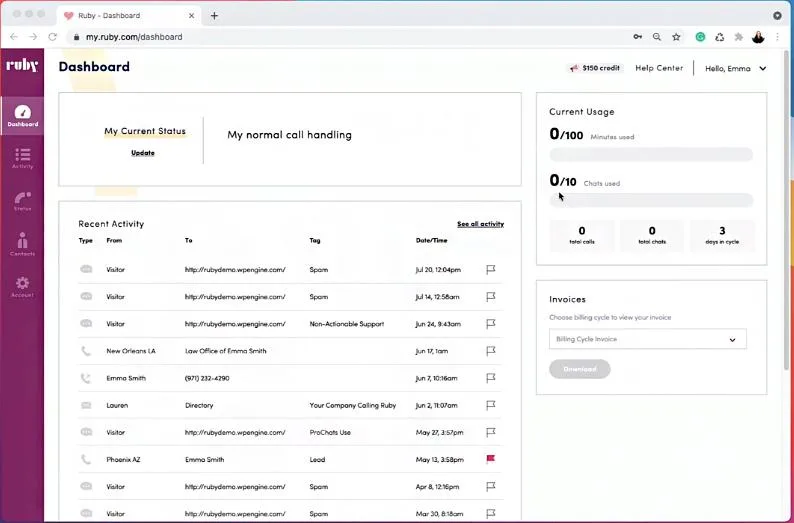


Ruby: its rates
Standard
Rate
On demand